The Core Difference: Toughness vs Sophistication
The simplest way to understand the G-Shock vs Edifice divide is this: G-Shock is a tool watch, Edifice is a dress-sport watch.
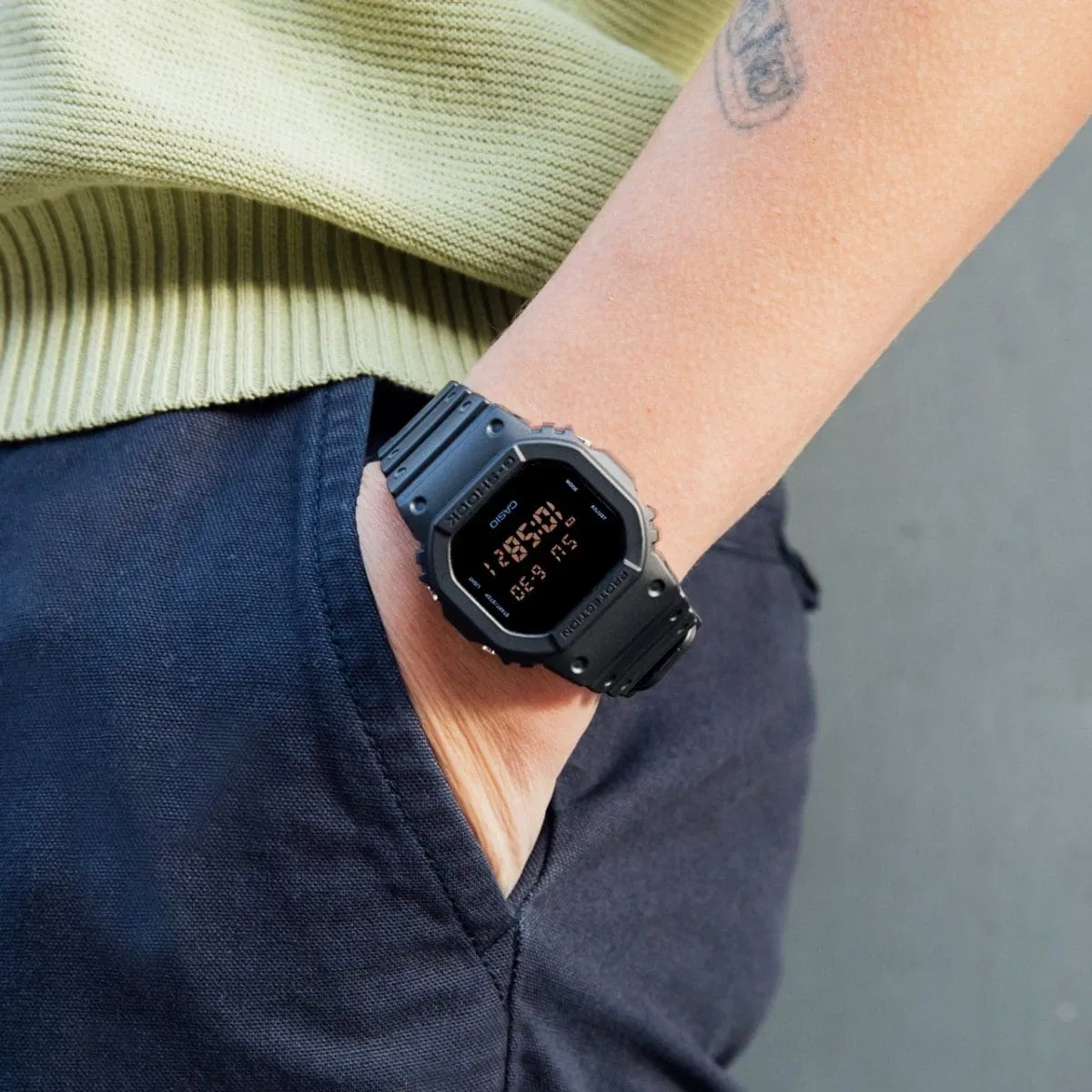
G-Shock was engineered around a 'Triple 10' concept — 10-meter drop resistance, 10-bar water resistance, 10-year battery life. Every design decision flows from that obsession with survival. The result is a watch that looks tough because it is tough: thick resin cases, recessed buttons, multi-layer construction.
Edifice takes the opposite approach. It starts with the look — the tachymeter bezel, the multi-subdial chronograph face, the stainless steel bracelet — and then adds practical features like 100M water resistance and quartz precision. It's a watch that says 'I'm serious' without screaming 'I'm going into a warzone.'
Neither is better. They're built for different lives.
Durability: G-Shock Wins by a Mile
If durability is your priority, G-Shock is the only answer. The G-Shock DW5600BB-1 ($99) has been tested to survive 10-meter drops, magnetic fields, and temperature extremes. The GWM5610-1 Solar Atomic ($129) adds solar power and atomic timekeeping so you never need to worry about battery or accuracy.
The Casio Edifice EFR-539 and EFV-130D are not fragile — they're solid quartz watches with 100M water resistance — but they're not designed to be thrown off a cliff. The stainless steel case and mineral crystal are durable for everyday wear, but the Edifice will show scratches and dents from rough treatment that a G-Shock would shrug off.
Winner: G-Shock — it's not close. If you work outdoors, play contact sports, or just want a watch you never have to baby, G-Shock is the answer.
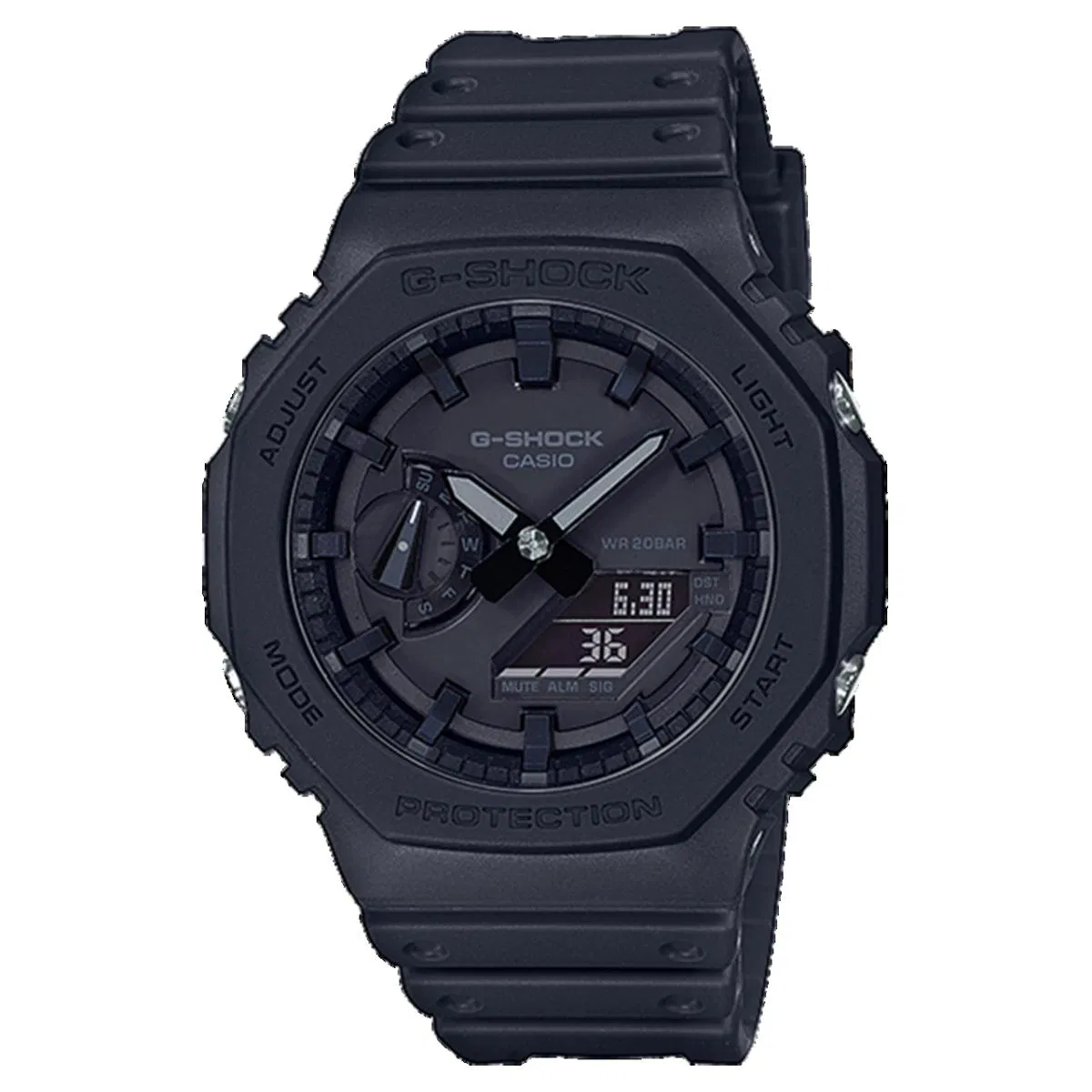
Shop G-Shock: DW5600BB-1 Blackout ($99) | GWM5610-1 Solar Atomic ($129) | GA2100-1A1 CasiOak ($99)
Design: Edifice Wins in the Boardroom
G-Shock's design language is unapologetically utilitarian. The square DW5600 case, the chunky GA2100 octagon, the massive Gravitymaster — these are watches that announce themselves. They look great in casual and outdoor settings. They look out of place at a job interview or a dinner reservation.
Edifice is the opposite. The EFR-539 Chronograph ($120) has the proportions and finish of a watch that costs three times as much. The multi-subdial face, tachymeter bezel, and stainless steel bracelet give it a motorsport-inspired sophistication that works in professional environments. The EFV-130D ($90) is even more versatile — a cleaner, sportier design that works from the gym to the office.
Winner: Edifice — if you need a watch that can go from a client meeting to a weekend drive, Edifice wins on aesthetics.
Shop Edifice: EFR-539 Chronograph ($120) | EFV-130D ($90)
Features: G-Shock Packs More Technology
G-Shock watches are feature-dense. Even the entry-level DW5600BB-1 has a stopwatch, countdown timer, multiple alarms, world time, and EL backlight. Step up to the GWM5610-1 Solar Atomic and you get Tough Solar charging (never replace a battery) and Multi-Band 6 atomic timekeeping (accurate to within 1 second per 100,000 years). The GA2100 CasiOak adds an analog-digital display and carbon core guard structure.
Edifice focuses on the chronograph experience. The EFR-539 has a precise quartz chronograph, tachymeter for speed calculations, and date display. The EFV-130D adds a clean analog chronograph layout. Both are excellent for timing events, but they don't have the multi-alarm, world time, and solar features of the G-Shock lineup.
Winner: G-Shock — more features per dollar, especially the solar and atomic models.
Price Comparison: Best Models Side by Side
Both lines offer extraordinary value. Here's how the best models compare:
| Watch | Price | Rating | Key Feature |
|---|---|---|---|
| G-Shock DW5600BB-1 | $99 | 4.7★ | Legendary toughness, 200M WR |
| G-Shock GA2100-1A1 CasiOak | $99 | 4.8★ | Slim analog-digital, carbon core |
| G-Shock GWM5610-1 Solar | $129 | 4.8★ | Solar + atomic, never needs battery |
| Casio Edifice EFV-130D | $90 | 4.4★ | Chronograph, stainless steel |
| Casio Edifice EFR-539 | $120 | 4.7★ | Motorsport chronograph, tachymeter |
| G-Shock Gravitymaster | $200 | 4.7★ | Twin sensor, aviation style |
At these price points, both lines offer extraordinary value. The Edifice EFV-130D at $90 is arguably the best-looking watch under $100 that Casio makes. The G-Shock GWM5610-1 at $129 is arguably the most practical watch under $150 from any brand.
Winner: Tie — both lines are exceptional value for money.
Who Should Buy G-Shock?
G-Shock is the right choice if you work in construction, military, law enforcement, or any outdoor profession; play contact sports, go hiking, surfing, or diving; want a watch you can wear 24/7 without ever thinking about it; prioritize practical features (solar power, atomic time, world time) over aesthetics; or want the most durable watch under $200 on the planet.
Best G-Shock picks:
- Budget pick: G-Shock DW5600BB-1 Blackout ($99) — the original, still the best
- Best all-rounder: G-Shock GA2100-1A1 CasiOak ($99) — slim enough for everyday wear
- Best upgrade: G-Shock GWM5610-1 Solar Atomic ($129) — never replace a battery again
Who Should Buy Casio Edifice?
Casio Edifice is the right choice if you work in an office or professional environment; want a watch that looks expensive without the price tag; appreciate motorsport-inspired design; need a chronograph for timing events; or want a watch that transitions from work to weekend seamlessly.
Best Edifice picks:
- Best value: Casio Edifice EFV-130D ($90) — 4.4 stars, 4,556 reviews, unbeatable at this price
- Best design: Casio Edifice EFR-539 Chronograph ($120) — motorsport look, tachymeter, 4.7 stars
The Verdict: Can You Own Both?
Many watch enthusiasts own both a G-Shock and an Edifice — and it makes perfect sense. They serve completely different roles: G-Shock as your everyday beater for outdoor adventures and sports, Edifice as your work watch for dates and events where you want to look sharp.
Together, a $99 G-Shock CasiOak and a $90 Edifice EFV-130D give you complete coverage for every situation in life for under $200 total. That's the real Casio value proposition.
If you can only buy one: choose G-Shock if you prioritize durability and features, choose Edifice if you prioritize style and professional appearance.
Not sure which is right for you? Try our free Watch Advisor [blocked] — answer 4 questions and get a personalized recommendation from our 75-watch database.
Frequently Asked Questions
Is G-Shock better than Casio Edifice? Neither is objectively better — they're designed for different purposes. G-Shock is better for durability and outdoor use; Edifice is better for professional and dress-sport settings.
Can I wear a G-Shock to work? Yes, especially the GA2100 CasiOak. Its slim 11.8mm profile and analog-digital display make it the most office-appropriate G-Shock. The Gravitymaster also works in professional settings with its aviation-inspired design.
Is Casio Edifice a luxury watch? No — Edifice is a mid-range quartz watch, not a luxury watch. But its design and finish punch well above its price point, often drawing comparisons to watches costing 5-10x more.
Which Casio Edifice is most popular? The EFR-539 chronograph series is consistently the bestseller, known for its motorsport-inspired design and tachymeter bezel. The EFV-130D is the best value entry point.
Do G-Shock watches hold their value? G-Shock watches are not investment pieces — they're tools. They don't appreciate in value like luxury watches. However, limited edition G-Shocks (collaborations, special colorways) can hold or increase in value on the secondary market.
Conclusion
The G-Shock vs Casio Edifice debate doesn't have a wrong answer — both are exceptional watches for their intended purpose. If you need a watch that can survive anything, buy a G-Shock. If you need a watch that can impress anyone, buy an Edifice. If you want both, buy one of each for under $200 total. That's the Casio advantage. Ready to find your perfect match? Try our free [Watch Advisor](/watch-finder) for a personalized recommendation, or browse our full [watch comparison tool](/compare) to see how these models stack up against the rest of the field.